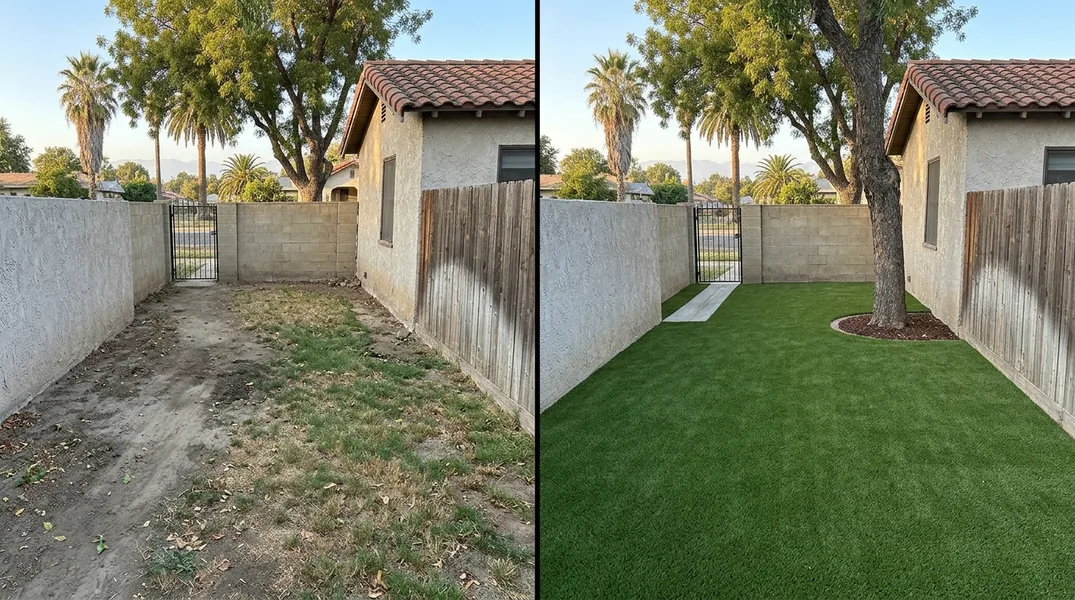
Why Base Preparation Matters in Fresno's Unique Soil
If you're considering Residential Artificial Grass Installation in Fresno, you've likely heard that the magic happens below the surface. The truth is, artificial grass is only as good as the foundation beneath it. Fresno homeowners face a particular challenge: our region's soil composition includes stubborn hardpan and variable sandy loam that can either support or sabotage your installation.
Hardpan is a dense, compacted layer of soil that forms naturally in the Central Valley. It restricts water drainage and can create puddles under your new turf. Sandy loam, by contrast, drains too quickly and can shift over time, leaving your artificial grass uneven and prone to settling. Neither condition is ideal straight out of the ground. That's why proper turf base prep isn't just a nice-to-have, it's essential for a long-lasting, beautiful lawn that stays level and drains correctly for years to come.
Understanding Artificial Grass Drainage Requirements
Artificial grass drainage is one of the most misunderstood aspects of installation. Many homeowners assume that because artificial turf doesn't need water to survive, drainage doesn't matter. This is a costly misconception. Water still accumulates on the surface from rain, sprinkler runoff, and pet accidents. Without proper drainage, that water sits on top of your lawn, creating soggy spots, mold growth, and unpleasant odors.
The goal of artificial grass drainage is to move water quickly away from the turf surface and down through the base layers into the ground or toward a designated drainage path. In Fresno, where we experience both intense summer heat and occasional heavy winter rains, a properly draining system keeps your lawn fresh, prevents algae, and extends the life of your turf investment. A well-designed drainage system also protects your home's foundation by directing water away from structures and preventing pooling near building footings.
What to Put Under Artificial Grass: Base Materials Explained
The question of what to put under artificial grass requires a layered approach, especially on Fresno's challenging soils. The standard foundation consists of three to four distinct layers, each serving a specific purpose. Starting from the ground up, the first step is often removing or breaking up existing vegetation and dealing with the native soil.
On hardpan, we typically need to perforate or scarify the surface to break up that dense layer and improve permeability. For sandy loam, we may need to add a stabilizing layer to prevent shifting. Next comes a geotextile fabric barrier, which prevents soil from mixing with your base materials while still allowing water to pass through. This fabric is crucial for maintaining the integrity of your base over time.
Above the geotextile, the primary base layer usually consists of crushed limestone or recycled asphalt millings, typically 4 to 6 inches deep. This layer compacts well, provides excellent drainage, and creates a stable, level platform. Some installations benefit from a second layer of smaller-grade crushed stone or sand, which helps with fine-tuning the level and provides additional drainage capacity. Finally, an underlayment or shock pad may be added for comfort and additional drainage performance, particularly for Pet Turf & Dog Run Installation or high-traffic areas.
Artificial Grass Underlay: Choosing the Right Material
The artificial grass underlay is the layer that sits directly beneath your turf, and it plays a dual role in both drainage and comfort. There are several types of underlayment available, each with different properties suited to different applications and soil conditions. In Fresno, choosing the right underlay depends on your specific soil type, the intended use of your lawn, and your budget.
For homes with hardpan issues, a perforated rubber or polyurethane foam underlay works well because it provides excellent drainage while preventing water from being trapped above the turf. These materials are also resilient, meaning they bounce back after compression and won't settle over time. For sandy loam areas, a denser underlay can help stabilize the base and prevent shifting. Some homeowners also choose underlayment for cushioning and safety reasons, particularly if the lawn will be used for play or exercise. The underlay also helps with temperature regulation, keeping the surface cooler during Fresno's hot summers.
Step-by-Step Turf Base Prep Process for Fresno Soil
Proper turf base prep follows a methodical sequence that accounts for Fresno's specific soil challenges. The process begins with site assessment and soil testing to determine whether you're dealing with hardpan, sandy loam, or a combination. Once the soil type is identified, the old lawn or vegetation is removed, and the ground is cleared of debris, rocks, and roots.
Next comes the critical step of addressing the native soil. If hardpan is present, specialized equipment breaks up the compacted layer to improve permeability. If the soil is sandy loam, a clay-based binder or stabilizer may be added to prevent future settling. The site is then graded to ensure proper slope and water runoff direction, typically sloping gently away from structures. A geotextile fabric is laid down to separate the native soil from the base materials. The base material, usually 4 to 6 inches of crushed limestone, is spread and compacted in layers using a plate compactor to create a firm, level surface. After the base is set, the underlay or shock pad is installed, and finally, the artificial turf is laid, seamed, and secured. Each step builds on the previous one, creating a system where water flows efficiently and your lawn remains stable and level.
Common Drainage Mistakes and How to Avoid Them
Many artificial grass installations fail prematurely because of preventable drainage errors. One common mistake is skipping the geotextile fabric layer entirely, which allows soil to mix with the base materials and clog drainage over time. Another frequent error is using the wrong base material, such as clay-based soil or regular dirt, which compacts and prevents water movement. Some contractors also fail to slope the site adequately, creating low spots where water collects instead of draining away.
Undersizing the base depth is another pitfall. A base that's too thin won't provide adequate drainage capacity or stability, especially on problematic soils like Fresno's hardpan. Additionally, some installations neglect to address the native soil first, simply laying materials over hardpan without perforation or over loose sandy loam without stabilization. To avoid these mistakes, work with experienced professionals who understand local soil conditions. Ask questions about the specific materials being used, the depth of each layer, and how drainage will be managed. When you're ready to move forward with your project, contact Fresno Turf Installation at (559) 860-0036 or request a free estimate to ensure your base prep is done right the first time.
Residential Artificial Grass Installation Near Me: Partnering with Local Experts
Choosing the right contractor for your Residential Artificial Grass Installation near you is one of the most important decisions in the process. Local contractors who understand Fresno's specific soil challenges, climate patterns, and drainage requirements are invaluable. They know how hardpan behaves in our region, they understand our seasonal rainfall patterns, and they have access to materials suited to local conditions.
When evaluating contractors, ask about their experience with hardpan and sandy loam installations specifically. Request references from past projects in your neighborhood or area. A reputable installer will walk you through the entire base prep process, explain what to put under artificial grass, discuss artificial grass underlay options, and answer all your questions about artificial grass drainage. They should provide a detailed estimate that breaks down each layer and material, so you understand exactly what you're paying for. Fresno Turf Installation has been serving Fresno homeowners with expert installation tailored to our unique soil conditions. Whether you're interested in a standard residential lawn, Pet Turf & Dog Run Installation, or specialized projects like Putting Green Installation, our team understands the foundation work required for success.
Looking for a professional artificial grass installation company in Fresno? Fresno Turf Installation responds fast for all your artificial grass installation needs.
Get a Free Quote