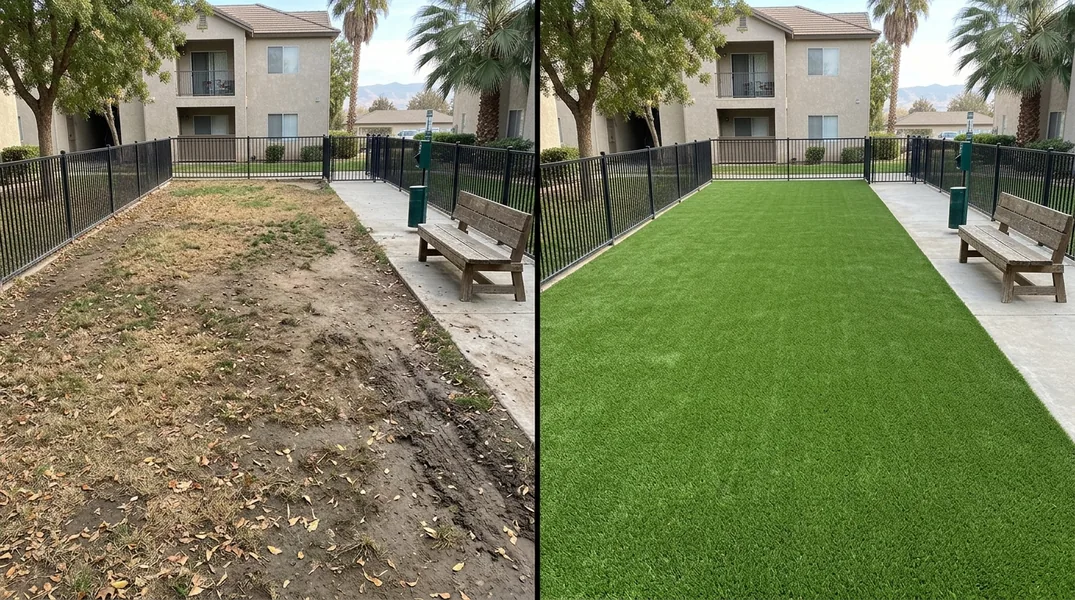
Turf vs. Artificial Grass: Understanding the Core Differences
When homeowners in Fresno start researching yard improvements, the question of turf versus artificial grass often tops their list. The decision isn't as simple as choosing between green and greener. Real grass and artificial turf each bring distinct advantages and trade-offs that depend on your lifestyle, climate, and long-term goals.
Real grass requires consistent watering, mowing, fertilizing, and seasonal maintenance. In Fresno's hot, dry climate, maintaining a lush natural lawn demands significant water resources and effort. Artificial grass, by contrast, eliminates mowing and watering almost entirely. Once installed, it requires only occasional brushing and rinsing to maintain its appearance. For busy homeowners or those prioritizing water conservation, this convenience factor alone can be transformative.
Artificial Grass vs. Real Grass: The Environmental and Health Angle
The artificial grass versus real grass debate has grown more nuanced in recent years, particularly around environmental and health concerns. One issue gaining attention is PFAS (per- and polyfluoroalkyl substances), synthetic chemicals sometimes used in artificial turf manufacturing. PFAS compounds can persist in the environment and have been linked to potential health concerns in some studies. If you're considering artificial turf, it's worth asking your installer about the specific product's composition and whether the manufacturer publishes independent PFAS test results for it. Some manufacturers now publish third-party PFAS testing for their products, so don't hesitate to inquire about this when discussing your free estimate.
On the flip side, real grass provides environmental benefits that artificial turf cannot replicate. Natural grass absorbs rainwater, reduces soil erosion, and creates habitat for pollinators and beneficial insects. It also naturally cools the surrounding area through transpiration, which can lower local temperatures on hot Fresno days. However, maintaining that natural grass in a desert-adjacent climate like ours requires either heavy irrigation (straining local water supplies) or acceptance of a dormant, brown lawn during dry months. This trade-off is precisely why many homeowners turn to artificial alternatives or explore drought-tolerant landscaping strategies.
Xeriscaping and Drought-Tolerant Landscaping: A Middle Ground
Xeriscaping and drought-tolerant landscaping represent a compelling alternative to both traditional lawns and full artificial turf installations. These approaches emphasize native plants, mulch, hardscaping, and strategic water use to create attractive, low-maintenance yards that thrive in Fresno's climate. Rather than replacing your entire yard with artificial grass, you might combine drought-resistant plants, gravel or decomposed granite, and selective turf areas to achieve a balanced, sustainable landscape.
Many homeowners find that a hybrid approach works best: perhaps incorporating a small patch of Residential Artificial Grass Installation in high-traffic zones where kids and pets play, while using native shrubs and perennials elsewhere. This strategy reduces water consumption, supports local ecosystems, and often costs less than a full yard conversion. Drought-tolerant plants like California buckwheat, sage, and desert marigold provide color and texture without demanding constant irrigation. If you're interested in exploring how a mixed approach might work for your property, the team at Fresno Turf Installation can help you evaluate your options during a consultation.
Shade Trees and Artificial Grass: A Practical Consideration
One factor that doesn't always receive enough attention in the artificial grass versus real grass debate is the role of shade. Shade trees can significantly complicate artificial turf performance and installation. While artificial grass doesn't require sunlight to survive, shade creates its own set of challenges. In shaded areas, moisture tends to linger longer on the turf surface, which can promote mold, mildew, and algae growth over time. Additionally, falling leaves and debris accumulate more noticeably on artificial turf and can be harder to remove completely without damaging the surface.
Real grass struggles in deep shade for different reasons: most lawn varieties need at least four to six hours of direct sunlight to photosynthesize and stay healthy. In heavily shaded yards, you'll often see thin, patchy grass that invites moss and weeds. If your Fresno property has mature shade trees, you have a few options. You can work around them by installing artificial turf only in sunlit areas and using shade-tolerant groundcovers or mulch beneath the canopy. Alternatively, you might prune tree branches to increase dappled light, though this requires ongoing maintenance. When planning your yard transformation, be honest about your shade situation and discuss it with your installer so they can recommend the best solution for each zone.
Residential Artificial Grass Installation Cost in Fresno: What to Budget
Cost is often the deciding factor for homeowners weighing their options. The pricing for artificial grass installation varies based on yard size, existing ground conditions, and the quality of materials selected. In general, artificial turf costs more upfront than seeding a natural lawn, but the long-term savings on water, maintenance, and landscaping services often justify the initial investment. Most homeowners can expect to spend between $8 to $15 per square foot for quality residential installation, though this range can shift depending on site-specific factors like soil preparation, drainage requirements, and local labor costs.
Beyond the installation cost, consider the lifetime value proposition. A natural lawn in Fresno's climate might require $500 to $1,500 annually in water bills, mowing services, fertilizer, and pest control. Artificial turf, once installed, typically costs just $100 to $300 per year in basic maintenance supplies. Over ten years, the math often favors artificial grass, even accounting for the higher initial outlay. To get a clear picture of what your specific project might cost, reach out to Fresno Turf Installation at (559) 860-0036 or request a free estimate online. Our team will assess your yard and provide transparent pricing tailored to your needs.
Making Your Decision: Key Questions to Ask Yourself
Before committing to artificial grass, real grass, or a drought-tolerant landscape hybrid, take time to reflect on your priorities. Do you value water conservation and environmental stewardship? Are you concerned about PFAS and other chemical additives? How much time and money can you realistically dedicate to yard maintenance each year? Do you have young children or pets who need a soft, durable play surface? Are shade trees a significant feature of your property? Your answers to these questions will guide you toward the right choice.
Artificial grass shines for homeowners prioritizing low maintenance, water savings, and durability in high-traffic areas. It's ideal if you have pets, children, or simply want a consistently green yard without weekly mowing. Xeriscaping and drought-tolerant landscaping appeal to those who value environmental impact and don't mind a more naturalistic, seasonal aesthetic. Real grass remains the best choice if you prioritize environmental benefits and don't mind the ongoing maintenance commitment. Many Fresno homeowners find that a combination of these approaches works best for their unique situation. Whatever you decide, Fresno Turf Installation is here to help bring your vision to life. Call us at (559) 860-0036 to discuss your yard and get started on your transformation today.
Looking for a professional artificial grass installation company in Fresno? Fresno Turf Installation responds fast for all your artificial grass installation needs.
Get a Free Quote